
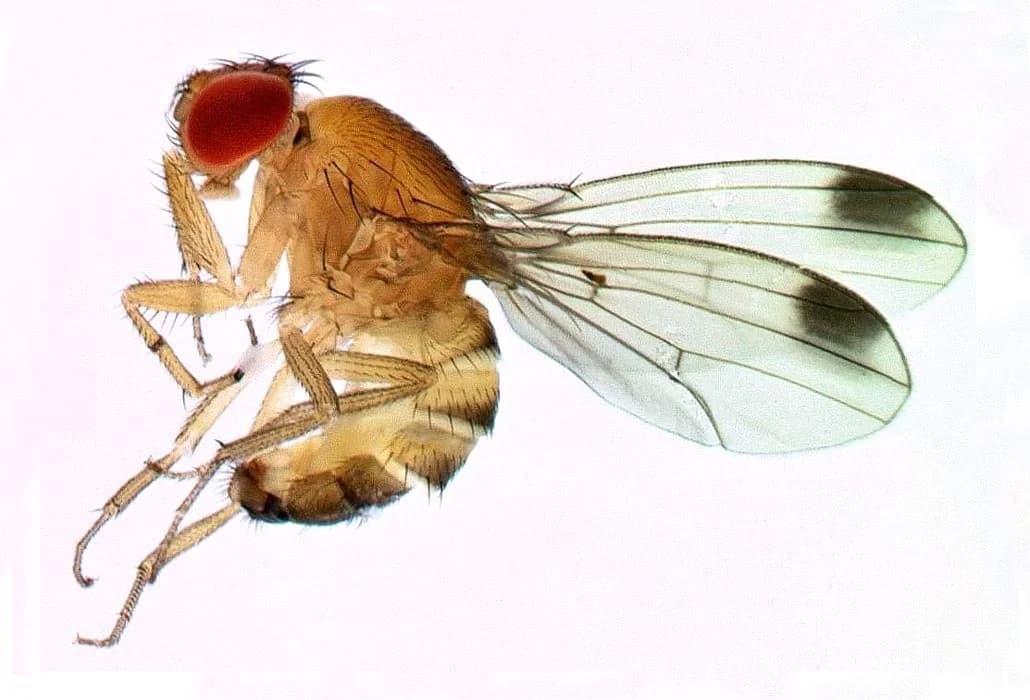
Modern agriculture faces an invisible but devastating challenge: Drosophila suzukii. This invasive fly is not just a common pest; it has a unique ability to pierce the skin of still-unripe fruit, such as strawberries and blueberries, causing losses that can reach 20% to 30% of production.
Control has traditionally relied on synthetic pesticides. However, science warns us: estimates indicate that more than 90% of active ingredients applied via spray never reach their target, resulting in environmental pollution and risks to pollinators. So how do we ensure productivity with sustainability? The answer lies in combining the wisdom of nature with the power of nanotechnology.
The Biorational Insecticide Revolution
Essential oils, extracted mainly from plants in the Lamiaceae and Asteraceae families, are emerging as the protagonists of this paradigm shift. Unlike conventional chemicals, these botanical compounds are rich in terpenes and phenylpropanoids, substances that modulate insect behavior through:
Repellency and Deterrence: Preventing females from laying eggs in the fruit.
Selective Toxicity: Acting on the nervous system and causing oxidative stress in the pest, without harming local biodiversity.
Low Resistance Risk: Due to their complex composition, it is far harder for D. suzukii to develop resistance to these products.
The Clever Trick: Optimization via Nanotechnology
Despite their high potential, essential oils are volatile and unstable under sun and rain. This is where our institution's technological innovation comes in. Nanoencapsulation and nanoemulsions act as microscopic shields that protect the botanical actives, enabling controlled, extended release in the field.
Recent studies show that the use of nanoparticles (such as polycaprolactone particles loaded with rosemary oil) not only increases the durability of the insecticidal effect but also reduces the doses required, making management more efficient and economical.
Advanced Strategies: Push-Pull and Attraction-and-Kill
In digital marketing, we talk a lot about "attracting the right lead." In the field, we use the Push-Pull technique:
Push: We use repellent essential oils near the crops to keep the flies away.
Pull: We attract the insects to the edges with attractive baits, where lethal control is carried out in a targeted way.
This surgical precision drastically reduces the need for full-area spraying, protecting the ecosystem and delivering a cleaner fruit to the end consumer.
Conclusion: A Commitment to Green Innovation
The gap between lab research and large-scale commercialization is narrowing. The advance of patents and the development of a "green nanobiopesticide policy" signal that we are entering a new era of agriculture.
Our institution remains committed to leading this research, validating technologies that combine biological efficacy with economic viability. The future of agriculture is technological, it is safe, and above all, it is biorational.