In the toxicology and biomonitoring sector, one of the market's biggest challenges is delayed detection of contamination. By the time we observe the first visible effects of contamination — organism mortality, behavioral changes, shifts in local biodiversity — the damage to the ecosystem is already severe and, often, irreversible.
For companies seeking real environmental compliance and sustainability, relying solely on "lethal effect" indicators is a considerable strategic and financial risk.
The Gap in Traditional Monitoring
Chemical analysis of water or soil alone often fails to reveal the real biological impact of a complex mixture of pollutants. Heavy metals, pesticides, microplastics, and nanomaterials can be present at sub-lethal concentrations that, while not killing the organism immediately, compromise its health in the long run — and the health of the ecosystem as a whole.
This is where redox biology biomarkers come in as an advanced technical solution.
The Power of Enzymatic Markers
Redox biology studies the balance between oxidants — such as reactive oxygen species (ROS) — and the body's antioxidant defenses. When pollutants disrupt this balance, what is known as oxidative stress occurs: a cellular response that precedes any visible damage.
Based on the work of Oliveira et al. (2026), published by IntechOpen, three central contributions stand out:
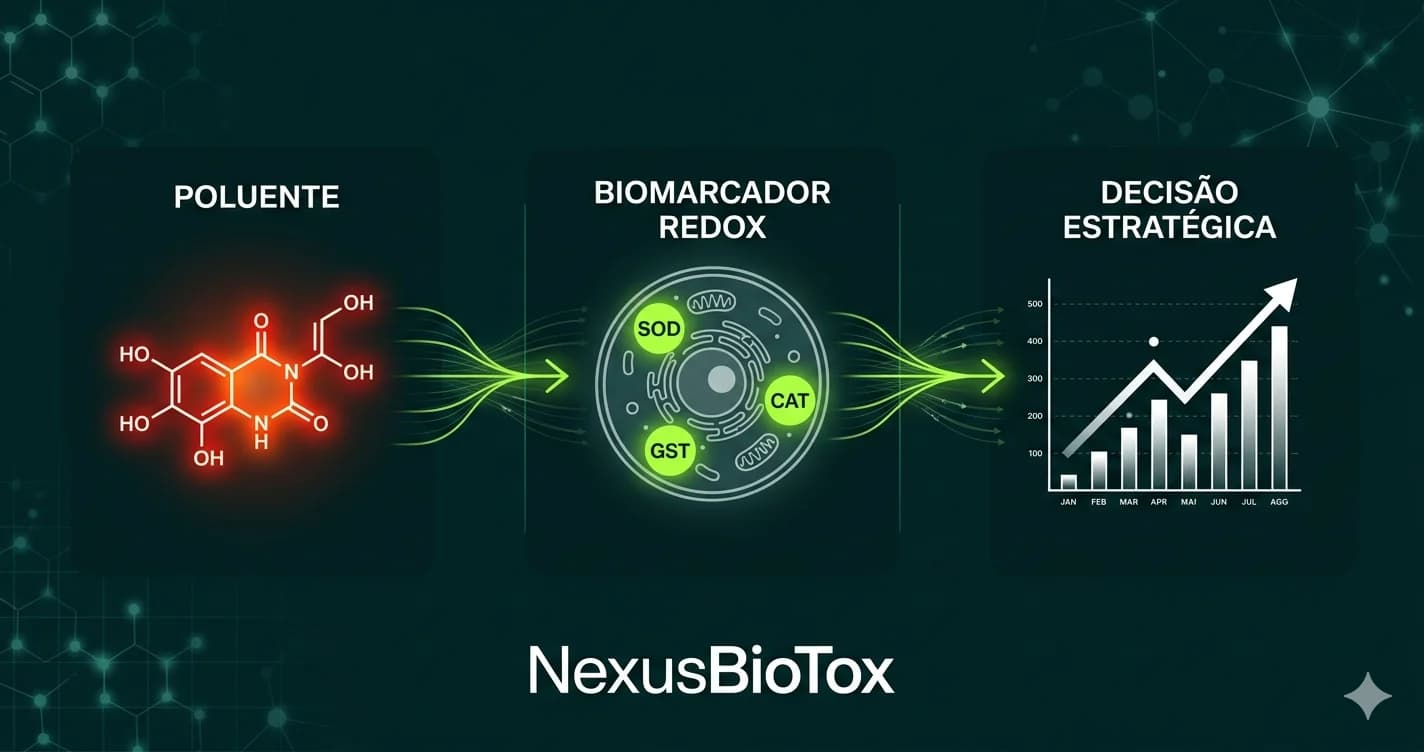
1. Early detection: Enzymes such as Superoxide Dismutase (SOD), Catalase (CAT), and Glutathione S-Transferase (GST) act as sensors that indicate chemical stress at the molecular level — before any clinical or ecological sign appears.
2. Data that complements chemistry: While chemical analysis tells you what is in the environment, redox biomarkers tell you what that is doing to local life — measuring damage to lipids (lipid peroxidation) and proteins with precise molecular diagnostics.
3. Model versatility: The study demonstrates effective application in microcrustaceans (Daphnia), corals, and fish, enabling monitoring adapted to different ecosystems and regulatory contexts.
Why This Matters for the Market
For environmental consultancies, industries, and regulatory bodies, integrating redox biomarkers into monitoring brings concrete benefits:
Legal and environmental security: Documented proof that operations are not causing silent biological harm — essential for permitting, audits, and environmental due diligence.
Cost efficiency: Identifying stress at an early stage allows for corrective action that is far cheaper than remediating a full-blown ecological disaster.
Emerging pollutants: Effective tools for assessing modern substances — microplastics, nanomaterials, pharmaceutical contaminants — that often slip past traditional analyses.
From Science to Business
At NexusBioTox, we turn this complex science into actionable data for strategic decision-making. Understanding redox biology is not just an academic matter — it is the key to high-performance environmental monitoring and genuine ecological responsibility.
🔗 Access the full chapter: intechopen.com/online-first/1237157
📩 Talk to our team: nexusbiotox.com.br